Collection of published books and book chapters edited, authored, and co-authored by the faculty of the Medical University of South Carolina (MUSC). This collection covers a range of topics and reflects the extensive research and scholarly output of MUSC faculty.
-
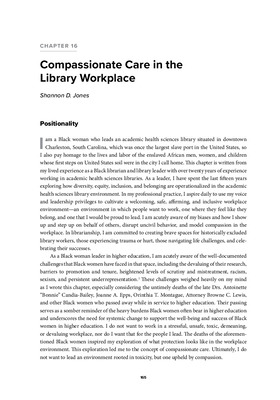
Compassionate Care in the Library Workplace
Shannon D. Jones
This chapter explores the role of compassionate care as a critical leadership practice in the library workplace, with a particular focus on academic health sciences libraries. Drawing on the author’s lived experience as a Black woman library leader and on over two decades in the profession, the chapter situates compassionate care at the intersection of compassionate and inclusive leadership and organizational well-being. In the context of ongoing collective trauma, including the COVID-19 pandemic, racial violence, political polarization, and sustained attacks on libraries, the chapter argues that compassion must move beyond empathy to intentional, actionable leadership. It examines how social identities, intersectionality, and implicit bias shape leadership practices and workplace experiences, and emphasizes leaders' responsibility to dismantle systemic inequities while fostering belonging and psychological safety. The chapter provides practical strategies for operationalizing compassionate care, including setting workplace ground rules, leveraging institutional resources, addressing salary equity, implementing recognition and high-touch engagement practices, and prioritizing wellness and self-care. Ultimately, this chapter positions compassionate care as an essential, values-driven framework for cultivating resilient, equitable, and humane library workplaces where workers can thrive.
-

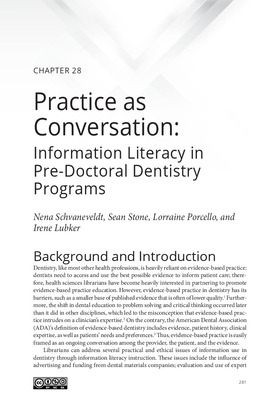
Practice as Conversation: Information Literacy in Predoctoral Dental Programs
Nena Schvaneveldt, Sean Stone, Lorraine Porcello, and Rena Lubker
Chapter in: Libson, S. & Willey, M. (Eds). Teaching Information Literacy by Discipline: Using and Creating Adaptations of the Framework
-
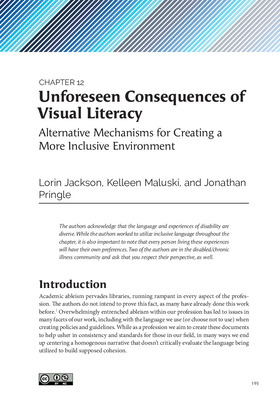
Unforeseen Consequences of Visual Literacy: Alternative Mechanisms for Creating a More Inclusive Environment
Lorin Jackson, Kelleen Maluski, and Jonathan Pringle
Acknowledging the commendable efforts of colleagues in articulating significant concepts and theoretical approaches to enhance visual literacy within the LIS field, this work critically examines the Visual Literacy (VL) Framework. The analysis calls for a more inclusive representation of diverse experiences, particularly those of individuals with disabilities. Drawing inspiration from the conceptualization of critique as care, the study emphasizes a collaborative approach to integrate social justice, equity, and inclusion principles better into LIS work. While recognizing the VL Framework's value as a starting point, the study identifies gaps related to universal accessibility and challenges in the language used. The chapter emphasizes the need for practical guidance on implementing the VL Framework components in real-time. The chapter delves into the language used in discussing visual literacy, highlighting its potential perpetuation of exclusion. In the context of visual literacy pedagogy, the study poses reflective questions to promote inclusivity in higher education settings. Ethical considerations regarding material interactions and institutional access are also explored.
-

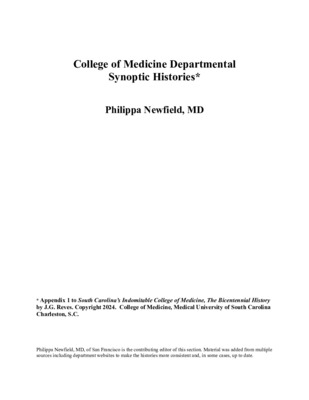
Appendix 1: College of Medicine Departmental Synoptic Histories
J. G. Reves
This is a multi-contributor compilation of the histories of all the academic departments in the College of Medicine. It was edited by Philippa Newfield, MD, and J.G. Reves, MD. Each department in the College of Medicine has a history and the histories are told primarily by the chairs of the departments.
-
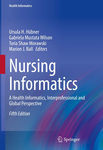
Telehealth: Reaching Out to Patients and Providers
Ragan DuBose-Morris, Katherine E. Chike-Harris, Kelli Garber, Aric M. Shimek, and Kelli Stroud
The integration of telehealth modalities into clinical, research and education systems is an evolving area of health informatics. While many of these technology concepts are not novel, their applications in today’s healthcare ecosystem provide the opportunity for the development of high-quality, secure interactions to better support patients, caregivers and their providers. Important regulatory, professional and legislative guidelines have been established to guide the development of technologies and practices across various practice settings, geographic areas and patient populations. This chapter explores telehealth applications and innovations related to service development specific to the integration of telehealth into health informatics systems and in partnership with broader healthcare teams.
-

Braving Our Blind Spots: Using a Virtual Book Discussion Group to Continue Conversations on Implicit Bias in Libraries
Shannon Jones, Kelsa Bartley, Melissa DeSantis, Ryan Harris, Don Jason, and Dede Rios
-
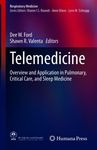
Telehealth Technology, Information, and Data System Considerations
Ragan Dubose-Morris, Michael Caputo, and Michael Haschker
This chapter explores the specific technologies that enable telehealth services in the areas of evaluation, monitoring, consultation, treatment, and care coordination. Historical, current, and future state applications are explored through case examples as a way to demonstrate technical functionality and capabilities. The foundational underpinning of broadband networks and the technological processes supported through telehealth vendors are presented. Additional discussions present examples of established systems, areas where interoperability is functional and the need for advancements in HIT technologies to better address security protocols and validate health analytics.
-
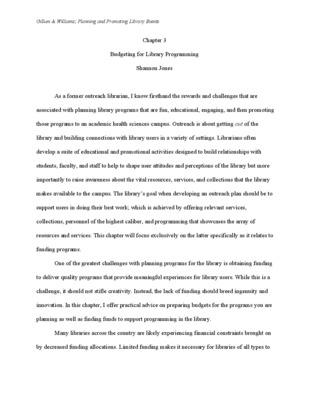
Budgeting for Library Programming
Shannon D. Jones
This chapter draws on the author’s experience as an outreach librarian to provide practical guidance for budgeting library programs in financially constrained environments. It emphasizes that limited funding should not stifle creativity; rather, it should inspire innovation and strategic thinking. The chapter outlines approaches for developing strong program proposals, identifying key budget components, and aligning initiatives with institutional priorities. It also explores various funding strategies, including internal support, partnerships, grants, revenue generation, and crowdfunding. Ultimately, the chapter encourages library professionals to think broadly and design meaningful programs that enhance the library’s visibility, impact, and value.
-
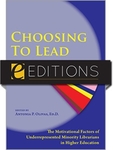
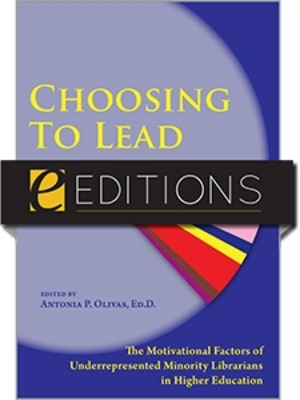
Leadership Begins with You
Shannon D. Jones
Chapter from "Choosing to Lead: The Motivational Factors of Underrepresented Minority Librarians in Higher Education," edited by Antonia Olivas.
-
Staff Recruitment, Retention, and Reward
Shannon D. Jones
This chapter draws on the author’s leadership experience to explore practical strategies for recruiting, retaining, and rewarding library staff in an increasingly competitive environment. It emphasizes aligning staffing decisions with organizational goals, identifying skill gaps, and implementing intentional recruitment practices. The chapter also highlights the importance of self-awareness, particularly in addressing unconscious bias. Retention strategies focus on creating supportive, growth-oriented workplaces that prioritize mentorship, professional development, and work-life balance. Finally, it underscores the importance of recognition and gratitude in fostering a positive organizational culture where staff feel valued and motivated to contribute to the library’s success.
-
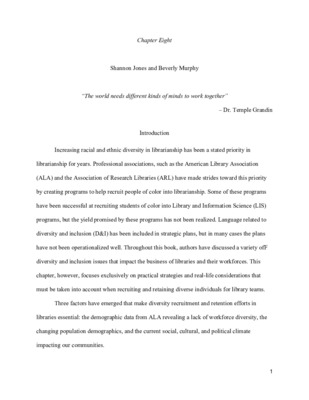
Core Competencies Across the Profession
Shannon D. Jones and Beverly Murphy
In this chapter, we explore the changing landscape of librarianship and the essential competencies needed for success in the profession. Drawing on literature and professional association frameworks, we examine how these competencies have been defined, applied, and adapted in response to technological advancements and evolving user expectations. We emphasize the increasing importance of both technical and interpersonal skills, as well as the necessity for cultural competence and lifelong learning. Additionally, this chapter addresses the gaps between theory and practice and highlights the importance of regularly reassessing competencies to ensure that librarians remain relevant, impactful, and responsive to the changing needs of their institutions and communities.